
Shadows on Screens
In 1927, The Jazz Singer, with its introduction of the talking picture, successfully began a new era in Hollywood. Along with completely changing the ways that film was shot, displayed, and viewed, the Talkie era also upset the star system hierarchy. Though the concept of star had been evolving since the beginning of the industry, this era shifted what was necessary for success so drastically that film favorites were soon cast to the side as they failed to adjust to the new era. It was by tapping into this past that television upended Hollywood’s star system at the turn of the third film era. Hollywood had long been preaching survival of the fittest and writing faded stars off as having lost the interest of the public. However, as television brought stars back to the spotlight, actors proved that they had audience appeal and they found a way to survive outside of Hollywood’s control. Through television, actors who had been written off by Hollywood as old, unwanted talent restarted their careers. While this was a focus on the past, it brought in a new era, one in which Hollywood was losing control.
Due to the gradual introduction of television, the third era of Hollywood, or the television era, does not have as definite of a transition as The Jazz Singer marked for shift from Silent to Talkies. However, it is agreed that this transition took place between 1948 and 1957. While this is a broad window, it is a window that includes both Sunset Boulevard and Singin’ In The Rain, marking these classic films as a part of an important transition in Hollywood. This is especially interesting as both films’ plots handle the first Hollywood transition. Though they do so through different styles and with different arguments, they both follow the same basic character structure: an older, washed up actress (Norma/Lina), a man who is not new to the business but not yet washed up (Joe/Don), and a young woman just making her debut into the industry (Betty/Kathy).


While it would take a couple more years to really feel the shifts and changes, 1946 was the first year in which film failed to make back its money. Part of this was to blame on the mass migration to the suburbs that happened right after the war, and part of it was court decisions that had weakened the strength of the film studios. Because of this, in 1949 Fortune magazine declared that Hollywood had reached the end of an era.
 This era ending affected studios and made actors nervous about their future careers, and it soon became clear that television could not be ignored by either group. As television brought in a new era, the second generation of Hollywood stars faced the potential of following the first generation into oblivion as the industry adjusted.
 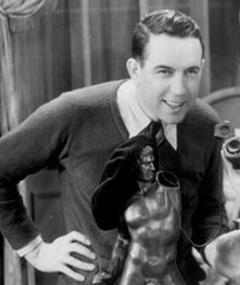 |
| Monta Bell |
 |
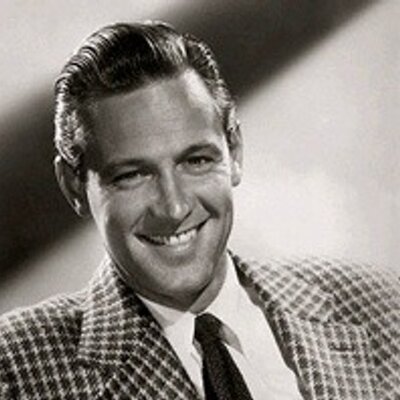
| Samuel Goldwyn |
Market values of film began to plummet and market values of television were on the rise. It is in the middle of this television takeover that the third generation of actors was introduced, as well as two famous films about transition: Sunset Boulevard (1950) and Singin’ In The Rain (1953). While these two films differ drastically in genre, tone, and aesthetic, and even come to the narrative at different points in history, both are fundamentally asking the same question; What happened to the first generation of movie stars? And, while they ask the same question, they eventually come to different conclusions: one that supports Hollywood in its discarding of talent, and one that criticizes it.
As television took hold, part of its strategy was to play on nostalgia. Television attempted to draw audiences in by providing them with familiar faces and attention was brought to these forgotten actors as TV began to show old films, which gave opportunities to relive old favorites that would not have been seen as often by the public once they were out of theaters. Television encouraged nostalgia, not just for the movies, but also for vaudeville and Broadway, establishing itself as a part of the entertainment industry that was in tune with its past. It was in the midst of this nostalgia that Hollywood developed an interest in the how and why of the collapse of the Silent Era star system and the conflicting opinions on that moment. This was not an accidental topic, but rather a way to process the incoming third era of Hollywood.
As television staked its space in the entertainment world, two simultaneous and connected events upset Hollywood’s momentum. The first was the loss of income and interest as television became more popular, the second was TV’s use of old stars to establish a legitimacy. By bringing back the discarded actors of the past, television was drawing audience, actor, and studio attention to who had vanished and why.
Sunset Boulevard and Singin’ In The Rain are ultimately movies about the first transitional period of Hollywood that were made in the middle of the second transitional period. While Sunset Boulevard paints a bleaker picture that shows Hollywood as a place that uses, exploits, and abandons, Singin’ In The Rain responds by insisting that the talented and persevering have nothing to fear. While the relationship between television and the movies, as well as the film industry and its stars, have evolved and shifted over the years, these two films are an interesting look at a particular moment in that evolution and the battles being fought about Hollywood’s image as they handled the third transition.


It is within this question and context that we are introduced to Norma Desmond and Lina Lamont, two of the most immortal characters in film history. These two leading ladies from the Silent Era of film both face the end of their careers as the industry shifts into the Talkie Era, allowing these women to function as stand-ins or embodiments of the first generation of film.
While these two women are similarly extravagant in their presentation, Sunset Boulevard presents a darker picture of the faded leading lady. Sunset Boulevard looks at Norma as a woman who was truly talented, but who has been abandoned by a swiftly shifting industry. Despite the fact that she helped get the studio on the map, she is now a has-been as the rest of the studio moves forward, she is forgotten by coworkers and fans. While she is respected by the industry as one of the trailblazers, she is not seen as an asset to modern film-making.
Lina, on the other hand, is presented by Singin’ in the Rain in a much different light. While she is completely glamorous and well-loved by fans, Singin’ in the Rain suggests that her talent never existed, but that she was able to skate by due to an inferior format of film, one in which the actors aren’t required to be true talent, but merely “shadows.” She did not make the studio, but rather she was made by the studio. Her demise from stardom is based on the fact that she shouldn’t have had it in the first place.
 While the treatment of Lina as someone dependent on a flawed form of film is a 1950s interpretation of the fall of the Silent Era and may seem an odd message from the movie industry, the critique of past formats of film, and thereby stars, can be seen as early as 1928 in a Photoplay, which was critiquing the stars of the 1910s as having depended on things such as not having closeups. Rather than closely and critically examining how and why the needs of the industry shift, the coming and going of familiar faces in Hollywood has been and continues to be pinned on a lack of talent that had gone unnoticed due to inferior methods and blamed on audience demands, releasing the studios themselves from any fault.
  |
| Pola Negri |
This rejection of actors, however, is acknowledged by Sunset Boulevard in the plot itself, as it follows Norma on her journey to try to get back into the movies. The studio turns Norma away and she is rejected romantically by Joe Gillis, an embodiment of the second era, who no longer needs her to further his career. Through this plot, Sunset Boulevard portrays the fall of the Silent Era as an abandonment of the actors by the studios and industry.
Singin’ In The Rain responds with the counter-argument that those who fell, fell on their own merit, and their continuation would have been an abuse of the studio. As Lina faces her end, she has no talent on which she can fall back, but rather relies on her contract and publicity. After all, she ain't people. She's a shimmering star.

Lina depends on the studio honoring her star status to keep her job, as she is completely incapable of maintaining her job on talent alone in the new era. Likewise, Don’s romantic rejection of Lina is based on her delusional belief that she is entitled to him, and not for a lack of personal gain on Don‘s part, as his entire career is built on being the older Lina Lamont‘s leading man, as well as risking the collapse of the studio, which Lina has threatened to sue, should she not get her way.

Like Joe Gillis, Don Lockwood represents the second generation of Hollywood, with one very large difference. Because of the nature of Sunset Boulevard, in which the past is brought back into the present, Joe is a true second-generation man. Having joined the industry post-sound, Joe is in no way an old-timer, but already losing steam and risking the end of his career as things begin to shift around him. Don, on the other hand, is a transition man. Having come to the studio later than Lina, he is still a pre-sound actor. This is largely due to the movie’s setting in 1927, which does not allow for an established character to have come along post-sound. Along with that, Don is the studio’s proof that actors can succeed through generational changes and can survive and even flourish in new eras. Don is Hollywood’s defense of their ability to adjust. While Lina’s star status is built on her contract, Don’s is built on his talent, his willingness to try new things, and his ability to overcome.
Singin’ In The Rain goes along with the official Hollywood statement that the talented survive, using Don as the evidence of talent being able to transition, while Sunset Boulevard takes a bleaker view. Sunset Boulevard argues that the discarding of actors has nothing to do with the level of talent, but the level of usefulness, and that this exploitative mindset would hurt the industry. Joe’s discarding of Norma comes back to haunt him when Norma kills Joe, denying him a chance to be part of the future industry with Betty.

 |
| So flexible. |
Don also functions as Hollywood’s promise that Hollywood will always be the talent central. Though both Don and Kathy come from the vaudeville backgrounds that television was trying to draw on, it is argued in Singin‘ in the Rain that neither could have reached their potential without Hollywood. It was important to make this argument to prove that the actors were still safe in Hollywood’s hands, especially as television took hold and many studios tried to forbid their stars from taking parts in TV shows. However, despite the attempts to uphold this idea, the studio system and its power had largely caved by that point, leaving actors to make their own professional decisions. Because of this, Hollywood was having to work at being seen by actors as a safe place in which to weather the transition, especially as Hollywood first admitted the television threat in 1949 (a year before Sunset Boulevard came out) and as radio was surpassed by television in 1953 (the same year Singin' In The Rain came out).


The third generation or era is represented by Betty Shaefer and Kathy Selden. In Sunset Boulevard, Betty Shaefer is introduced as a bright and promising, up and coming writer. Likewise, Kathy Selden is an up and coming actor. Betty ends up being hurt by the exploitation of Hollywood as well and ends up leaving to pursue being a writer through a different avenue than that offered to her by Joe, or the second generation. In response to this grim view of the future, Kathy Selden brings a sunnier message and manages to push Lina, the first Hollywood generation, out, while inspiring the second generation, Don, to learn, change, and grow. This overcoming and cooperative attitude allows Kathy to reach star status with Don’s help.
Singin’ In The Rain uses Kathy to try to convince the coming third generation of actors that they can succeed in Hollywood, whereas Betty is depicted as finding a life somewhere else. While talkies were easily leveraged by the film industry for their success, TV proved a harder foe, as it was outside of the industry’s control. However, Singin’ In The Rain tries to convince the audience that those who are willing to withstand the storm of transition, or, in other words, those who are willing to sing in the rain, will come through strong.
 |
| Look at us, just singin' our way through transition. |
Because of the dangers of the losing their stars, movies quickly needed to decide how to fit into the new world of TV. At first, Hollywood refused to haggle with the television industry, offering only deals that would benefit Hollywood. To justify this, they proceeded to attempt to show that TV was fully dependent on Hollywood. Movie Play says in an article from 1955 about Hollywood actors on TV, “TV wouldn’t be half as grand without all the grand people from Hollywood. It’s the talent that tells, and most of it is found in Movieville, U.S.A.!” Despite this declaration, Hollywood was having trouble. Movie people had theorized since 1950 that Hollywood Stars and Producers were going to jump sides to television, and the Hollywood studios were just going to have to follow suit. Eventually, it had to be admitted, if you can’t beat them, join them. This is a phrase used in Singin’ In The Rain to describe the transition into sound.
However, while the head of the studio in Singin’ In The Rain, R.F. Simpson, refers to the transition to sound as a moment of joining, rather than beating, the movie itself does not seem ready to give up the fight against TV or to admit fault in the fading of stars. This movie rather responds to Sunset Boulevard and defends the actions of Hollywood in times of transition. Both films play on older tradition, both films use a three era framework, and both express anxieties about the future of Hollywood. However what makes these films ultimately different is that Sunset Boulevard expresses the fears of the actors, and Singin’ In The Rain brings the attention back to the fear of the industry. Which movie do you think is right? Or is there an in between? Either way, here's to the generations of actors before us. The Normas and Linas, Dons and Joes, the Bettys and Kathys. Film history wouldn't be the same without you.
 |
| Right, R. F.? |


Comments
Post a Comment